Larraintzar

Let’s explore Larraintzar

Do you dream of visiting a beautiful village set in a green valley full of animals, lovely rivers and picturesque farmhouses? Larraintzar lies north of Pamplona (Iruñea), in the Ultzama Valley. It is the administrative centre of the municipality of Ultzama and sits on a rise in the central part of the valley. You can reach it from the roads coming from Auza, Lizaso or Iraizotz. Access is via a lovely uphill stretch.

As you climb, one of the first large houses you will see is the inn. Run by There and Txikito, it offers a weekday set menu, a weekend menu and excellent pintxos. Home-style traditional cooking, meats from our valley and desserts made at the inn itself stand out. The juicy local mushroom scramble is especially renowned. The inn is linked by stairs to the village’s only square—a place where you can play all kinds of sports, including Basque pelota, the traditional sport of the area.

Pueblo Larraintzar

History / Art:

Larraintzar is a village full of history. Particularly well known is the episode that involved the Ultzama Valley around 1575: a witchcraft trial. Women with knowledge of healing herbs and pain-relieving treatments were branded as witches, including some from Larraintzar. Arrests were carried out and even the bachelor Ozcoidi moved to Ultzama to pursue these women on site—so unjustly treated.

The church, dedicated to Saint Peter, originally had Renaissance lines but was destroyed by fire in 1564. After several reconstructions, a new building was erected between 1827 and 1830. It has a Latin cross plan with a single nave; the tower rises at the west end, and beside it on one side is the porch through which the church is entered. A medieval baptismal font is preserved inside, brought from the abandoned settlement of Udoz, which once stood midway between Larráinzar and Gorronz.

Distinct from the typical farmhouse style is the former school building, built in 1909. It consists of three sections, all two storeys high, although the elongated central section is slightly lower and originally housed the classrooms, with large windows on the side façade. The end sections, which housed the teachers’ dwellings, have square plans and hipped roofs. The whole building is built in neatly laid masonry with corner quoins and stone-framed openings.

The terrain on which Larráintzar sits means that, besides the main street, only a few short streets have developed, without forming a dense urban grid. As a result, some houses have appeared along the road that skirts the village, and others at the beginning of the road that links it to Iraizotz, once the Arakil River has been crossed and before the road becomes steeper.

In this very stretch, several facilities serving the whole valley have been grouped together. First, near the old roadside inn at a crossroads with a path towards Lizaso, schools were built. In the late 20th century they were replaced by a new school centre, and the old building was taken over by the Town Hall and other municipal services. Next to the new school—which has an indoor sports hall—there is also a fronton and a swimming pool, and in the same area a health centre. The old inn has been restored as a civic centre.

Nature:

Naturaleza Larraintzar

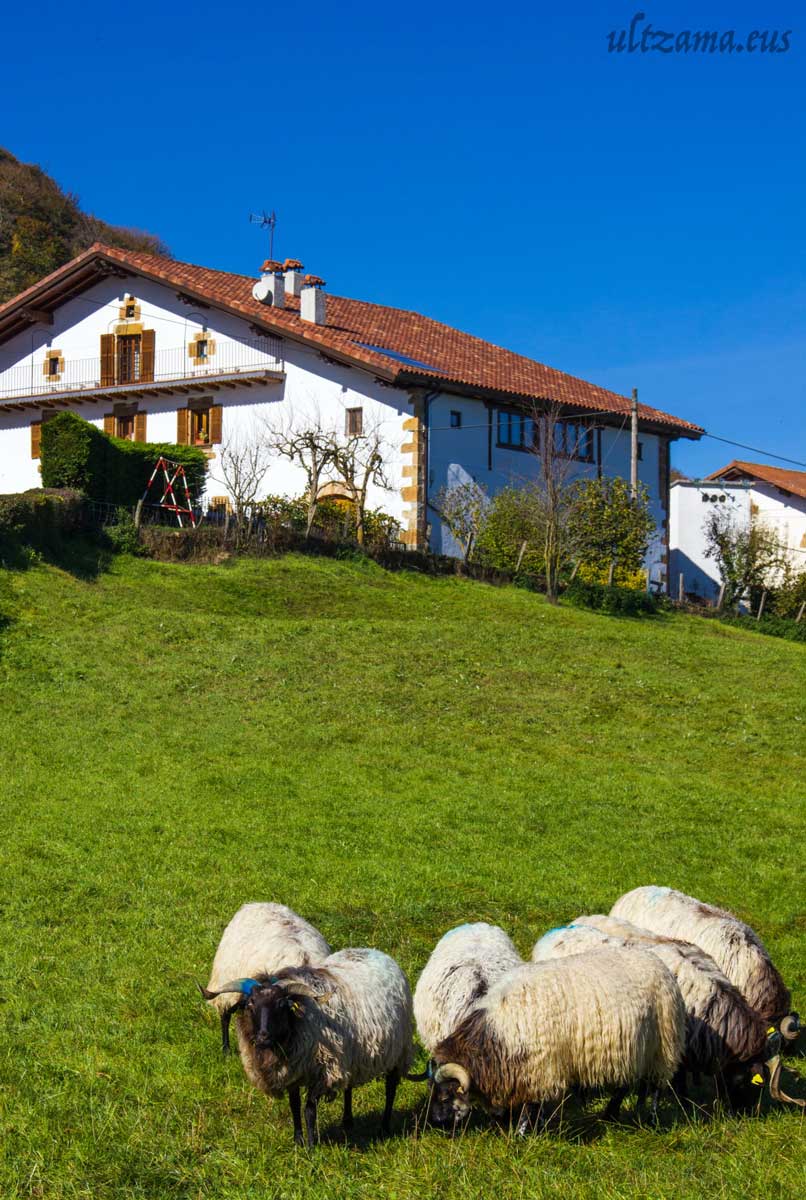
Larraintzar is surrounded by green hills and meadows, with a wide variety of animals and plants. You can see beautiful horses, wonderful flocks of sheep and large cows that reflect the traditions and way of life of the villagers. You will also find many tree species, such as large and broad oaks, bright green beeches and sturdy ash trees. In the surrounding woods live wild animals such as wild boar, deer and roe deer.

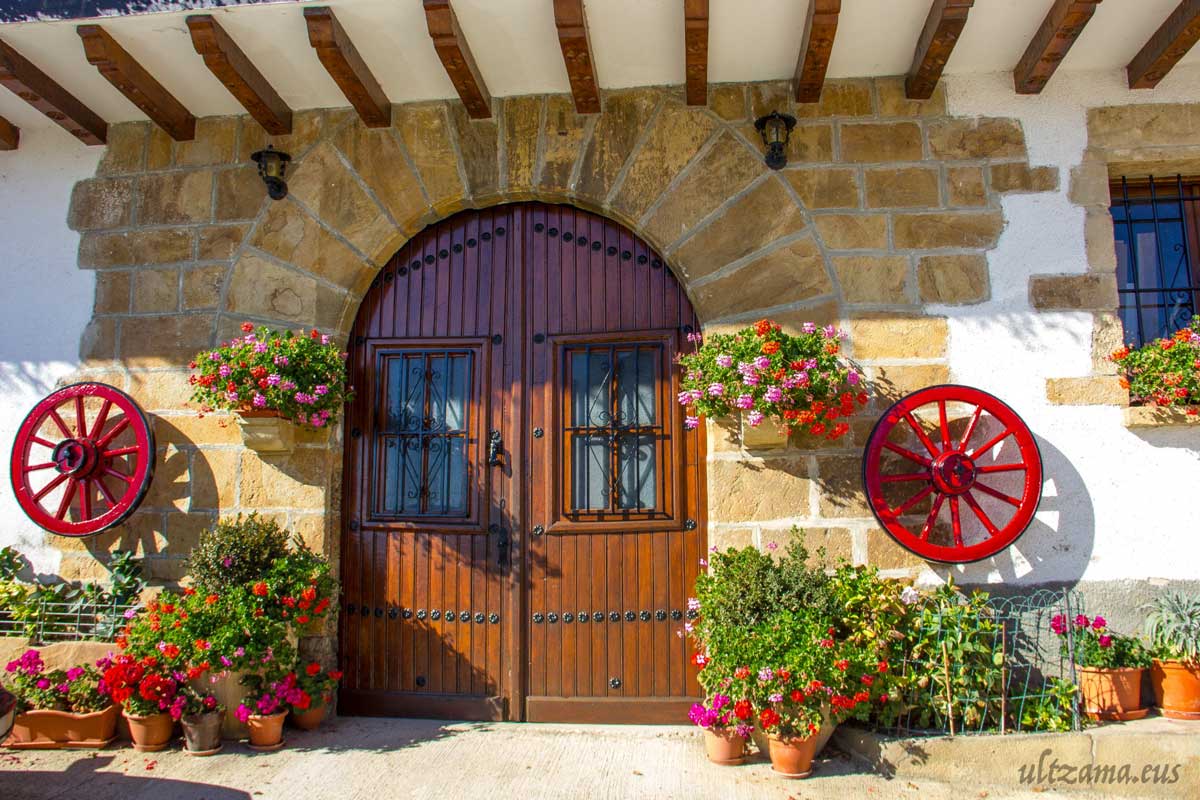
Adding colour to these landscapes, flowers hang from balconies, creating one of the most typical scenes in the valley: Ultzama’s large, colourful balconies. You can find everything from small white daisies to big, vibrant hydrangeas.

A proposal:

A family-friendly route is the one that takes us to Beuntza.

Specifically, we will make a short ascent to the small ridge that separates the Atez and Ulzama valleys. Our steps will lead us to the highest point of this rise.

We leave the car on the road coming from Lizaso, next to the Larraintzar pharmacy. Once parked, we head towards the centre of Larraintzar, uphill, passing the Church of San Pedro, built in the 19th century.

As we leave the village from the church, we take a track on the right. This track allows us to climb steadily, with no risk of getting lost, up to the highest area. Once there, we find an antenna; beyond it we continue first on the track and then on a path, entering the woods where little by little we will make out the summit, though without views of the valley.

From the top, we descend gradually along a path until we rejoin the ascent track, completing a loop. Shortly after, we return to Larraintzar and back to the place where we left the car.

Where is it?

Sign In